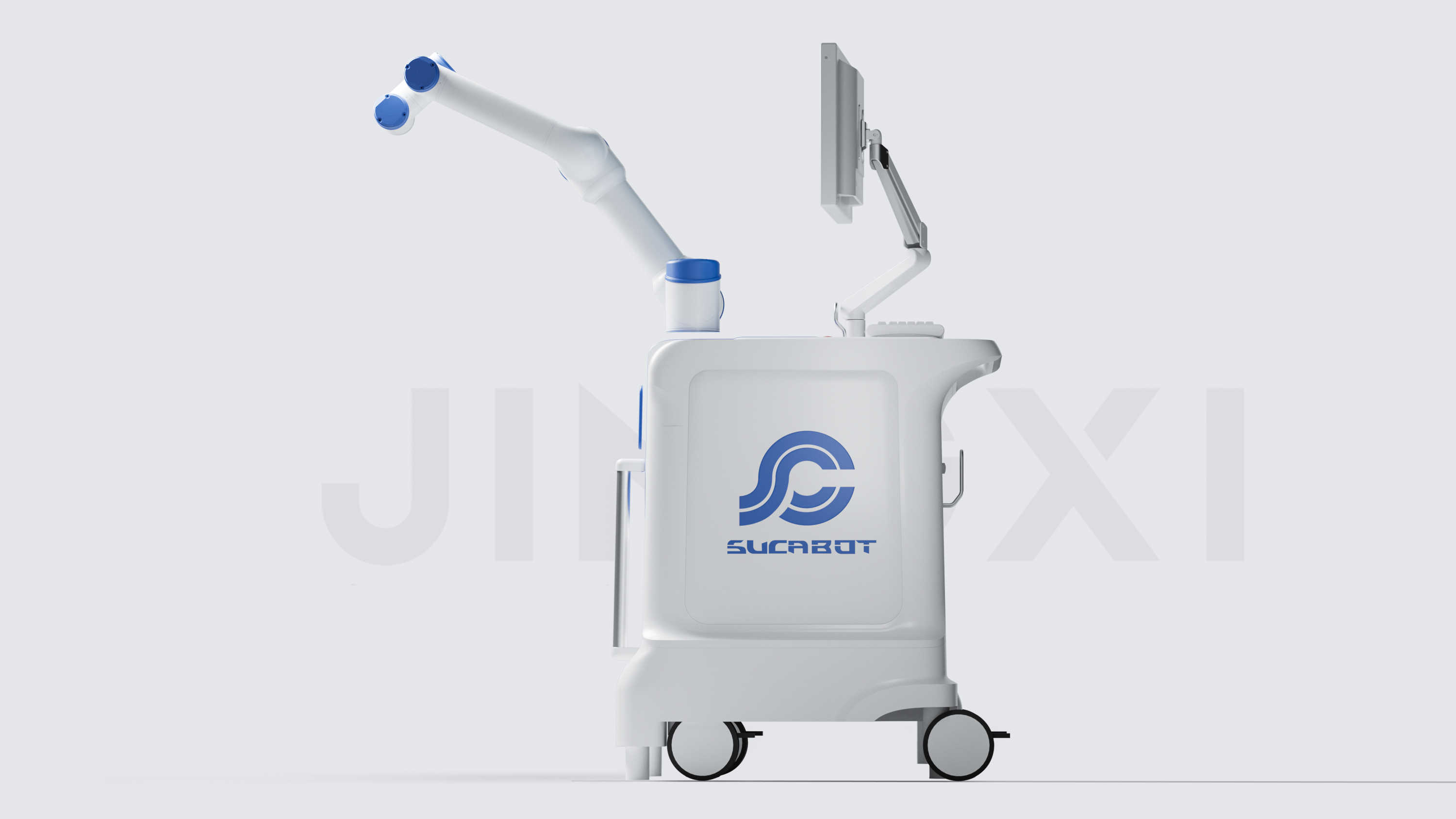
医疗手术辅助机器人外观设计的核心挑战在于平衡功能性与医疗场景的特殊性。首先,需在紧凑结构中集成高精度机械臂、多屏交互系统及无菌化外壳,这对空间利用率提出极高要求。医疗环境对设备清洁度、抗腐蚀性及电磁屏蔽性能的严苛标准,要求材质选择需兼顾耐用性与生物兼容性。
The core challenge in the industrial design of surgical assistance robots lies in balancing functionality with the unique requirements of medical settings.
The core challenge in the industrial design of surgical assistance robots lies in balancing functionality with the unique requirements of medical settings.

设计策略:
整体采用「上圆下方」的对比构图:底座为稳固的方形结构,搭配静音万向轮,确保机器人在医院复杂环境中的灵活移动与精准定位;上部主体以柔和的弧形轮廓过渡,既降低碰撞风险,又通过流线型设计隐喻医疗设备的科技属性。
The upper section features gentle, curved contours that not only reduce the risk of collisions but also evoke the technological nature of medical equipment through its streamlined design.

机械臂采用仿生学设计,多关节结构模拟人类手臂的灵活度,末端可集成多种医疗工具(如药品分发模块、生命体征监测探头等),通过隐藏式线缆管理保持视觉整洁性。
The robotic arm features a biomimetic design, with a multi-joint structure that mimics the flexibility of a human arm; various medical instruments can be integrated at its tip.

色彩主要以经典的「白+蓝」配色为主调,大面积采用哑光白色,传递洁净、无菌的感官印象;蓝色作为点缀色应用于机械臂关节、屏幕边框及品牌标识,既呼应医疗行业属性,又通过冷色调的理性气质强化设备专业性。
The color scheme primarily features the classic "white and blue" combination, with extensive use of matte white to convey a clean, sterile aesthetic;